

Published by
Stanford Medicine

Author

Health Policy, Men's Health, Orthopedics, Research

Report deals another blow to synthetic bone growth product

report-deals-another-blow-to-synthetic-bone-growth-product

An independent group at Yale University has dealt another blow to a bioengineered protein that was once commonly used in spinal fusion surgery. The Yale University Open Data Access Project found that the human recombinant bone morphogenetic protein-2 (rhBMP-2) “provided little or no benefit compared to bone graft and may be associated with more harms, possibly including cancer.”

The findings, published in the June 18 issue of the Annals of Internal Medicine, confirm a 2011 review of the product by the editors of the Spine Journal, led by Eugene Carragee, MD, professor of orthopedics at Stanford.

What is most troubling, Carragee says, is that the Yale group found that surgeons who received millions of dollars from Medtronic Inc., the maker of the protein, misrepresented its efficacy and underreported complications. Carragee and his colleagues had previously reported in the Spine Journal that the product, marketed as Infuse, carried a range of side-effects, including male sterility, urinary problems, infection, nerve and bone injury and possible cancer risk. Carragee said in a statement released by the journal:

To put the YODA findings in perspective, one must understand the carnival-like promotion that preceded BMP-2’s fall from grace. Market boosters advised that the BMP-2 product went beyond all other medical innovations. Perhaps confusing Infuse with penicillin or the polio vaccine, one zealot proclaimed: ‘Infuse, the single most successful biologic product ever launched in orthopedics and possibly ever in medicine.’

In a triumph of understatement, the YODA group informs us that ten years after its development, ‘it is difficult to identify a clear indication for BMP-2 use in spinal fusion.’ Ten years after penicillin was developed, people were saying it had saved a quarter million lives in World War II. Ten years after the polio vaccine, braces had disappeared from grammar schools. Ten years after BMP-2’s introduction, the YODA group could not identify a single compelling indication for use – but we know it can kill you in the cervical spine and probably can promote cancer, which can then kill you.

In 2012, the U.S. Senate Finance Committee conducted an investigation into the marketing of the product, as well as into physician/industry relationships and the scientific publishing process. It named three surgeons who had particularly lucrative financial ties with Medtronic, ranging from $10 million to $35 million each. These physicians had authored some of the early studies on BMP-2 that framed it in a positive light and helped launch it into general use by orthopedic surgeons.

Carragee says it’s unfortunate that after years of this “self-congratulatory research,” physicians still have a poor understanding of the protein:

At present these ‘concerns’ regarding higher rates of cancer, sterility, wound problems and nerve injury remain poorly described. The suggested reason for this gap in our understanding, if true, is simply appalling: these complications were systemically ‘misrepresented,’ ‘underreported,’ or just “missing’ from the first decade of publications. The research to better understand those complications and risks is still before us.

To its credit, Medtronic financed the $2.5 million YODA project.

Previously: For the record: Carragee on Medtronic spine stories, Stanford-led study on Medtronic bone product dominates the headlines, Stanford orthopedist reveals problems with Medtronic spinal fusion product, and Stanford study links spine product to male infertility

Health Policy, Public Health, Stanford News

Stanford Hospital trims use of blood supplies

stanford-hospital-trims-use-of-blood-supplies

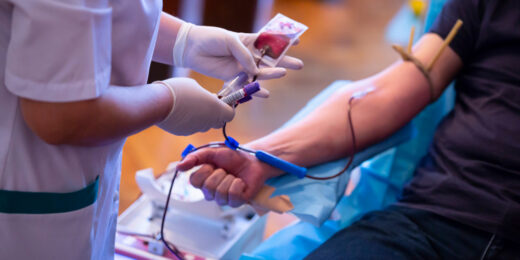
In keeping with a national trend, Stanford Hospital & Clinics has significantly reduced its use of precious blood supplies in recent years. The trend reflects a growing awareness that while blood may be life-saving, it also carries risks to patients, an important consideration in deciding whether a patient should receive a transfusion, said Lawrence Goodnough, MD, a professor of pathology and hematology at Stanford.

Goodnough, who directs the transfusion service at Stanford Hospital & Clinics, recently wrote a commentary and co-authored two papers in the Lancet (subscription required) about trends in blood use and blood alternatives.

Four years ago, Stanford Hospital launched a program that has made doctors think twice before they order blood for a patient. Now, every time a doctor requests blood through the hospital’s electronic medical record system, a pop-up alerts the clinician to guidelines on blood use and asks him or her to explain the reason for the request. Physicians then may reconsider or cancel the order.

The system contributed to a 24 percent decline in use of red blood cells at the hospital between 2009 and 2012. Transfusions of all blood products at the hospital fell from more than 60,204 to 48,678 during that time. Goodnough said, “Here we are leveraging electronic medical records to reverse this national trend toward overutilization and motivating people to follow a more restrictive blood practice.”

The decline reflects a national trend. At a meeting earlier this month of the International Society of Blood Transfusion, officials at the American Red Cross, which supplies about half of the nation’s blood, said blood use fell by 3 percent in 2011 and another 5 percent in 2012, said Goodnough, who attended the meeting.

There are currently no standard guidelines for blood use and some controversy about what levels of hemoglobin should trigger a transfusion, leading to wide variability in blood utilization around the country, Goodnough said. He believes each patient’s situation should be considered individually.

“I don’t think there is one laboratory value that should be used. Older patients may be different than younger patients, for instance,” he said. “So the message is that there is not one number. We should use a restrictive transfusion philosophy — when the treating team is convinced that the benefits of transfusion would outweigh the risks.”

For more discussion on the latest study, read this Inside Stanford Medicine article from today.

Previously: New issue of Stanford Medicine magazine asks, What do we know about blood?, Retro arcade-style video promotes blood donation and Woman’s story of her son’s hereditary spherocytosis highlights the importance of blood donation
Photo by El Alvi

Global Health, HIV/AIDS, Stanford News

U.S. AIDS Czar tells Stanford audience that witnessing death is a powerful motivator

In his early days as an AIDS specialist, U.S. Ambassador Eric Goosby, MD, watched as 500 of his patients died of a disease that he and his colleagues could do nothing to stop.

“None of us were prepared for the amount of death that confronted us,” he said of that time in the late 1980s and early 90s at San Francisco General Hospital. The clinicians also suffered at the overwhelming burden of loss, developing symptoms of PTSD and gathering for weekly sessions to talk about their departed patients and what they meant to them.

That experience essentially defined his work today as the top U.S. official for global AIDS programs, Goosby said in a talk last Thursday at Stanford School of Medicine. He told the audience:

It was the central motivator – the fact that I had been in front of so many people who didn’t get the benefit of antiretroviral therapy. I felt driven – and still do – because of those early losses to make sure people who would benefit from these drugs get in front of them.

Goosby today is director of the President’s Emergency Fund for AIDS Relief (PEPFAR), which celebrates its 10th anniversary of providing vitally needed assistance to developing countries affected by HIV/AIDS. He also serves as the U.S. liaison with the multi-national Global Fund to Fight AIDS, Tuberculosis and Malaria and most recently became director of the new Office of Global Health Diplomacy at the Department of State. He visited Stanford at the invitation of Michele Barry, MD, director of the university’s Center for Innovation in Global Health.

When PEPFAR began in 2003, there were only 50,000 people in sub-Saharan Africa, the region hardest hit by HIV/AIDS, who were on life-saving antiretroviral (ARV) therapy, which was first marketed in United States in 1997. In those days, there were two, three or four people sharing beds in African hospitals, where ailing people lined the hallways. Death was so prevalent that there was a shortage of wood to build coffins, he said. But death rates have declined significantly with the growing availability of precious medications. Now there are some 5.1 million people on ARV’s, in large part because of PEPFAR’s support, he said.

In addition to direct aid for therapy, a significant portion of PEPFAR’s funding – or $1.3 billion – goes to the Global Fund, and that “buys a lot of lives,” Goosby said.

Since the global economic downturn of 2008, the PEPFAR budget, like most U.S. government programs, has been strained, remaining flat after years of significant increases. Goosby said the program has been able to continue to provide treatment by switching from brand-name drugs to generics, which are less costly; streamlining distribution systems; reducing some staff; and using less costly transport methods, such as trains and trucks, to distribute supplies.

“This is a very important program, but it has had to get smarter about how it uses its money,” he said.

Continue Reading »

Events, HIV/AIDS, Stanford News

U.S. AIDS czar coming to Stanford to discuss global health

u-s-aids-czar-coming-to-stanford-to-discuss-global-health

Ambassador Eric Goosby, MD, the nation’s AIDS “czar” and an infectious disease specialist who treated HIV/AIDS patients in the early days of the epidemic, will visit Stanford School of Medicine next Thursday, May 30, for a conversation on global health.

Early in his career, Goosby treated AIDS patients at San Francisco General Hospital, back in the days when there were limited options for treatment (I remember crossing paths with him then, as I was a writer with University of California-San Francisco and based at the hospital).

Goosby has since gone on to major positions within the Clinton and now, the Obama, administrations. As the U.S. Global AIDS Coordinator, he directs the President’s Emergency Fund for AIDS Relief (PEPFAR), the nation’s premier international AIDS program begun in 2003 under the Bush administration. In recent years, he has come under fire from activists who believe the Obama administration has fallen back on its commitment to the program, whose budget has remained constant after years of substantial increases.

But at the International AIDS Conference in Vienna in 2008, former President Bill Clinton defended Goosby before an audience of thousands, saying he’s a good man with the best of intentions.

In addition to his work with PEPFAR, Goosby is the U.S. liaison with the Global Fund to Fight AIDS, Tuberculosis and Malaria, the international public/private partnership that provides antiretroviral medication to patients in developing countries. Goosby also leads the new Office of Global Health Diplomacy at the State Department.

I’ve heard Goosby speak on several occasions and found him to be an engaging and inspiring speaker with a deep understanding of global health needs.

The Stanford program will be held at 5:45 p.m. at the Li Ka Shing Center for Learning and Knowledge on the medical school campus. It’s free and open to the public, though registration is required.

Previously: Video: Kaiser Family Foundation town hall with U.S. Global AIDS Coordinator and New AIDS czar a good fit

Research, Stanford News

Study provides first evidence of deadly fungal infection among African clawed frogs in California

study-provides-first-evidence-of-deadly-fungal-infection-among-african-clawed-frogs-in-california

When I was a child growing up on the East Coast, I would often fall asleep to a concerto of frogs croaking outside my window. But that comforting sound has been silenced by the decimation of frog populations across the globe. In addition to environmental pollution and loss of habitat, one of the culprits is a highly transmissible deadly fungus, which has been identified for the first time among frogs in California, including one in Golden Gate Park.

Stanford researchers examined 201 preserved specimens from the California Academy of Sciences in San Francisco, which has one of the oldest and largest herpetology collections in North America. Of the 23 specimens collected between 2001 and 2010 in California, three were found to be positive for the fungus – one from San Francisco and two from San Diego.

“Our goal was to document historically how far back this fungus might have existed in California. Until this study, there were no reports to substantiate that Xenopus laevis (African clawed frogs) in California were infected with this fungus,” Sherril Green, DVM, PhD, professor and chair of comparative medicine, told me. She is the senior author on the study, which appears online today in PLOS ONE.

Green, who is a recognized frog expert, says the frogs were imported from Africa to the United States in the early 20th century as they were routinely used in pregnancy testing. When the urine of a pregnant woman is injected into the frogs, the frogs begin producing eggs – the sign of a positive pregnancy. Though the practice was discontinued in the late 1970s, some frogs from the testing were released into the environment – an unfortunate move from a conservation perspective, Green says.

The African clawed frogs are large – as much as seven inches across – and are highly invasive, posing a threat to native amphibians. They are carnivorous and may devour fish and other frogs that cross their path and may be carriers of disease, particularly the deadly fungus known as Batrachochytrium dendrobatis. Researchers previously have established that clawed frogs in Africa were infected with the fungus as far back as the 1930s. In the latest study, the Stanford researchers identified the earliest reported case of a specimen with the disease, a frog found in Kenya in 1934.

The fungus is believed to be responsible in part for frog epidemics in many countries, including the United States, UK, France, Spain, Germany, Portugal, Italy, Brazil and Japan and throughout North America, Green says. Though there have been U.S. government proposals to further restrict the importation and transport of the African frogs, she says this likely comes too late, as the frogs are already widely dispersed around the globe. It’s hoped that over time native species will become resistant to the fungus and ultimately survive, she says.

Health Policy, HIV/AIDS, Public Health, Sexual Health

Task force recommends HIV screening for all people aged 15 to 65

task-force-recommends-hiv-screening-for-all-people-aged-15-to-65

When we think of the AIDS epidemic, many of us turn to the developing world, overlooking the fact that HIV is very much a problem here in the United States. Every year some 50,000 people in this country are newly diagnosed with HIV, and many of these individuals previously had no idea they were infected with the virus.

To help prevent further spread of the disease, which affects an estimated 1.2 million Americans, the U.S. Preventive Services Task Force has issued (.pdf) a final recommendation that every adult between 15 and 65 be screened for the virus. Younger adolescents and older adults considered at risk also should be screened, as well as all pregnant women in labor whose HIV status is not known, the task force suggests.

“Treatment for HIV has advanced remarkably, helping people live longer and healthier lives, and reducing HIV transmission,” Stanford professor Douglas K. Owens, MD, one of the members of the task force, told me last week. “Treatment is most effective when offered early in the course of HIV disease, typically well before people have symptoms, and screening enables people to learn they have HIV in time to get the full benefit from treatment.”

“Screening  is especially important because up to quarter of people who have HIV do not know they have it,” Owens added.

Studies have shown that people who are infected with the virus are significantly less likely to pass it along if they are receiving ARV treatment, which reduces the amount of virus circulating in the blood. Moreover, people who are infected are more likely to do better – suffering fewer opportunistic infections – if they receive treatment early on, rather than wait until symptoms occur and the disease becomes more advanced. For these reasons, identifying infected individuals through universal screening makes good public health sense.

The task force’s latest recommendation, published in the new issue of the Annals of Internal Medicine, is in keeping with the guidelines of the American College of Physicians, the American Academy of Pediatrics and the federal Centers for Disease Control and Prevention. Owens talked more about this issue with me last fall, after the task force’s draft recommendations were released.

Previously: Stanford expert discusses recommendation for universal HIV screening, Task force issues draft recommendation for universal HIV screening and National HIV screening and testing could be very cost-effective

HIV/AIDS, Public Health, Stanford News

Stanford test a landmark in the blood-banking industry

As a reporter for a Palo Alto newspaper in the early 1980s, I interviewed Ed Engleman, MD, director of the Stanford Blood Center, about the blood center’s introduction of a novel HIV screening test, the first of its kind in the country.

Thirty years later, I revisited the test – and all the controversy surrounding it – as it would prove to be a landmark period in blood-banking history. What I discovered is detailed in a new story in the latest issue of Stanford Medicine magazine.

Fortunately I was able to plumb the memories of Engleman, who is still directing the blood center, as well as Herbert Perkins, MD, now 94, who directed the Irwin Memorial Blood Bank in San Francisco at the time. Because San Francisco was then an epicenter of the epidemic in the United States, Perkins was in the eye of the storm, trying to protect the blood supply while respecting the civil rights and privacy concerns of those in the gay community, where HIV was prevalent.

The debate about how to ensure the safety of blood supplies took place at a time when very little was known about HIV/AIDS. It was a true scientific mystery, with researchers speculating about the cause of this strange and deadly illness, which then had no name, and postulating about the potential for its spread through blood transfusion.

Another interesting perspective for the story came from Jeff Lifson, MD, now a leading AIDS researcher at the National Institutes of Health, who was a resident at Stanford working in Engleman’s lab during the crisis. He and Engleman both remembered the feeling of being ostracized by blood banking colleagues for introducing what they believed was – and what would later prove to be – a life-saving test.

Previously: New issue of Stanford Medicine magazine asks, What do we know about blood?

HIV/AIDS, In the News, Infectious Disease, Stanford News

Stanford pediatric AIDS expert: Was the baby really cured?

stanford-pediatric-aids-expert-was-the-baby-really-cured

In the last few days, there has been much talk about the baby born with HIV who was reportedly cured of the disease – only the second documented case of an AIDS “cure.” Like a good scientist, Yvonne Maldonado, MD, a pediatric AIDS expert at Stanford, is a bit skeptical and says there are many questions yet to be answered.

“It brings a lot of promise and hope but there are lots of details to be looked at before the next step can move forward,” said Maldonado, chief of pediatric infectious disease at Stanford and Lucile Packard Children’s Hospital. She has been doing research on mother-to-child HIV transmission for many years, working with a group of women in Zimbabwe.

According to news reports, the Mississippi mother came to the hospital in labor, and tests showed she was HIV-positive. Because the mother had never been treated for HIV, doctors knew the chance was high that she would transmit the virus to her baby. So within 30 hours of the baby’s birth, they took the unusual step of treating the infant aggressively, with a full cocktail of antiretroviral drugs. The child continued treatment for 18 months, then stopped. And when the mother brought the two-year-old  back for a checkup, tests showed – remarkably – that the baby was virus-free.

One pressing question, Maldonado says, is whether the baby was truly infected. Babies can acquire HIV from their mothers in several ways – either in utero, during labor and delivery or as a result of breastfeeding.

Did this child become infected in utero with the virus, which was ultimately eliminated by the antiretrovirals? Or did the child simply carry some circulating virus from the mother in its blood – and the drugs stopped the virus from establishing itself in the baby?

“Those are two different things,” Maldonado told me. In the first case, “That would be a functional cure. The other would be preventing early post-partum infection,” a form of prevention, rather than cure.

She said there have been anecdotal reports of babies who have been able to clear the virus from their bodies. “You can find virus in infants that then disappears because they haven’t become infected,” she said.

If, on the other hand, this is truly a functional cure, then that has many implications for treatment of infants down the road. “If in fact that was the case, maybe that means instead of giving light therapy to prevent infection, all these babies (of HIV-positive mothers) should be getting heavy-duty therapy right from the start.”

Maldonado notes that pediatrics has routinely led the way in HIV prevention and treatment, as unlike adults, one can often identify when a baby became infected – and then quickly move to intervene. She said it’s unfortunate the latest case, reported at a scientific meeting, occurred during the weekend of the budget sequester.

“Our capacity to study this will be limited,” she said. “NIH will be flat-funded, and yet here’s an opportunity to look at these paradigm-shifting concepts. But these things need resources. It may be a serendipitous finding, but it will be just that if you don’t do more science-based inquiries.”

Previously: International AIDS Conference Day Three: Daring to talk about a cure and Experts discuss German patient who appears cured of HIV

Genetics, HIV/AIDS, Immunology, Research, Stanford News

Engineering immune cells to resist HIV

engineering-immune-cells-to-resist-hiv

People with HIV have to take a cocktail of drugs daily to keep the lethal virus in check. But a novel gene therapy approach, now under development at Stanford, could make patients resistant to the virus and free them from this lifelong dependence on drugs, which have adverse side-effects.

In a new study, the researchers describe their technique of using “genome editing” to make T cells, key cells of the immune system, resistant to the virus. In studies done in the lab, the technique effectively blocked the virus from entering the cells through one of two receptors, known as CCR5 and CXCR4. These are the two common entry points for the virus.

In one instance, the researchers used genetic manipulation to deactivate the CCR5 receptor gene. And for added protection, they were able to introduce three known anti-HIV genes into the receptor genes. This blocked both CCR5 and CXCR4. These modified T cells had more than 1,200-fold protection, and in some instances more than 1,700-fold protection, against HIV; unmodified cells succumbed to infection in a matter of weeks, the researchers reported.

The research is still in the early stages and has to go through animal testing, as well as clinical trials. But it is a very encouraging step forward in the field of gene therapy for HIV, Matt Porteus, MD, the lead investigator told me.

“I feel this is a significant improvement in the first generation application. So I’m very excited,” he said.

Interestingly, as I left Porteus’ lab, located in the Lorry I. Lokey Stem Cell Research Building, I ran into another HIV researcher and mentioned the work, which was entirely new to him. That’s how innovative this technique is.

Porteus, a pediatrician, is interested is using the approach to treat other diseases as well. A hematologist and cancer biologist, he treats children at Lucile Packard Children’s Hospital and is hoping some of his patients, such as those with sickle cell anemia, might someday benefit from a gene therapy approach along these lines.

Chronic Disease, Health and Fitness, Nutrition

Living the gluten-free life

living-the-gluten-free-life

Eight months ago, I went gluten-free. People often ask me why and how I manage, especially with all the treats that present themselves during the holidays.

First, I do not have celiac disease. I chose to avoid gluten on the advice of a nutritionist who I consulted because of thyroid issues. I have Hashimoto’s disease, a disorder of the thyroid. I learned that thyroid problems have been linked to gluten. Apparently, the molecular structure of gluten resembles that of the thyroid gland, so ingesting gluten may trigger an immune response that tells the body to attack the thyroid. Or so the theory goes.

So the nutritionist suggested I stop eating products with gluten and see whether my thyroid function improved. I honestly can’t tell if avoiding gluten has had any impact on the thyroid, but I do know it has led to many other positive changes.

For one, my joints began to feel a lot better. Gluten is said to cause inflammation; in my gluten-free travels, I have met people with arthritis who told me their symptoms disappeared after they stopped ingesting gluten, as presumably the inflammation went away. I don’t have arthritis, but I do exercise regularly and used to have to take a day off in between workouts because my joints were sore. Now I don’t experience that — I can go to the gym every day and feel OK.

My digestion also improved. One of the symptoms of low thyroid is digestive problems, especially constipation. On my new gluten-free regimen, this is never a problem. I also noticed that when allergy season came around this year, I didn’t get the sniffles, as I usually do. And, I began to feel a lot more energetic.

How do I manage food-wise? Well, I discovered a whole new world of wonderful gluten-free products. And I check restaurant menus online before I go out to dinner to make sure there is something there I can eat. I bring my favorite gluten-free crackers, nuts and other snacks to parties just in case there’s nothing on the table for me. I have even brought Tamari, a gluten-free soy sauce, to Chinese restaurants, some of which will prepare gluten-free meals for me. I have to admit that the moments that challenge me most are at restaurants that serve delicious breads before the main meal; it’s hard to stare those breads in the face when you’re hungry.

I’ve learned to avoid most desserts. I know I can always go home and eat a piece of chocolate or nibble on my favorite flour-free chocolate cake, which I often keep on hand for such emergencies. And honestly, I stick with this plan in part because it’s a great weight-control method. When presented with a vast array of gluten-filled tempting treats, I just look the other way. I just remind myself how good I feel.

Previously: Using your cell phone to test for food allergens, A discussion on going gluten-free, From frustration to foundation: Embracing a diagnosis of celiac disease and Guest post: Flying the friendly skies while navigating the challenges of eating gluten-free
Photo by Whatsername

Stanford Medicine Resources: